
atelier_be

POST-CEMENT ECOLOGICAL CONCRETE FOR URBAN FURNITURE
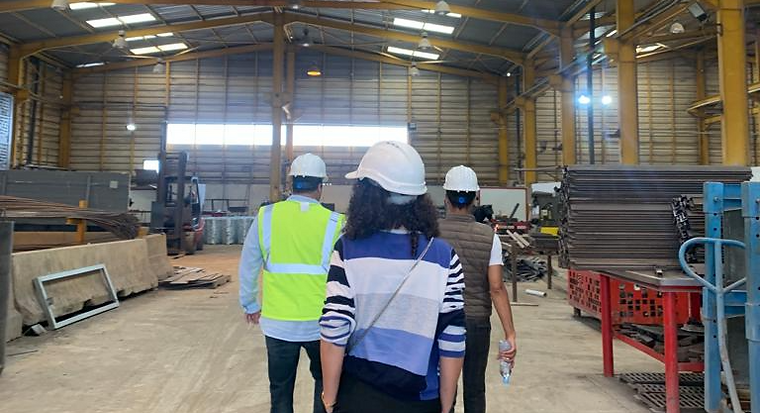
When considering its composition, concrete is first and foremost a binder: a material capable of hardening within a mould without the need for subsequent firing, and of agglomerating aggregates whose size varies depending on the intended application. The production of cement—the binder most commonly used in modern concrete today—is responsible for nearly 52% of CO₂ emissions within the building sector. The intensive extraction of aggregates required for its manufacture represents a significant threat to global sand reserves. Moreover, cement-based concrete often delivers performance levels that exceed actual functional requirements, while concrete waste resulting from demolition—mainly reused as road sub-base—is relegated to less noble applications. Taken together, these observations render the near-systematic reliance on cement concrete an environmental aberration. Yet established construction paradigms continue to prevail: those who design, build and lay masonry tend to default to concrete. It has therefore become essential to question the constituent materials of concrete and to explore alternative pathways in order to reduce the environmental footprint of our built environment. This research emerged from the convergence of a project, excavation sites in Casablanca, Morocco, the vision of a forward-thinking industrial partner, and our own commitment to eco-responsible materials. This material, extracted from the Moroccan subsoil—used historically to shape Marrakech—is recyclable, capable of binding heterogeneous materials together, and requires significantly less energy to produce than cement.
TECHNOLOGY
Using video games to train and inform building professionals about eco-responsible construction practices. The building sector is responsible for 40% of global greenhouse gas emissions. While alternatives do exist, access to training, networking, and information remains limited. New technologies allow us to transcend these limitations.

3D PRINTING
In chemistry, metals are materials whose atoms are bonded by metallic bonds. They consist of simple substances or, more commonly, alloys that are generally hard, opaque, lustrous, and good conductors of heat and electricity. They are usually malleable, meaning they can be hammered or pressed to change shape without cracking or breaking. Many substances that are not classified as metallic under atmospheric pressure can acquire metallic properties when subjected to high pressures. Metals have numerous common applications, and their consumption has increased sharply since the 1980s, to the point that some of them have become critical mineral raw materials.
